



Kingdom Animalia consist of phylum Porifera, Coelenterata, Platyhelminthes, Nematoda, Annelida, Arthropoda, Mollusca, Echinodermata, Protochordata and Vertebrata.
Phylum vertebrata is divided into five classes Pisces, Amphibia, Reptilia, Aves and Mammalia.
Pisces

Vertebrata : Pisces
Class pisces contains all fishes. Pisces are aquatic animals having streamlined body and muscular tail. Skin is covered with scales and heart of pisces are two chambered. They breathe through the special organ called gills, which extract dissolved oxygen in water. Animals in class pisces are cold blooded and lays eggs to produce young ones. Fishes can be bony or made up of cartilage. Examples of pisces are Seahorse, scoliodon rohu, etc.
Amphibia
Vertebrata: Amphibia
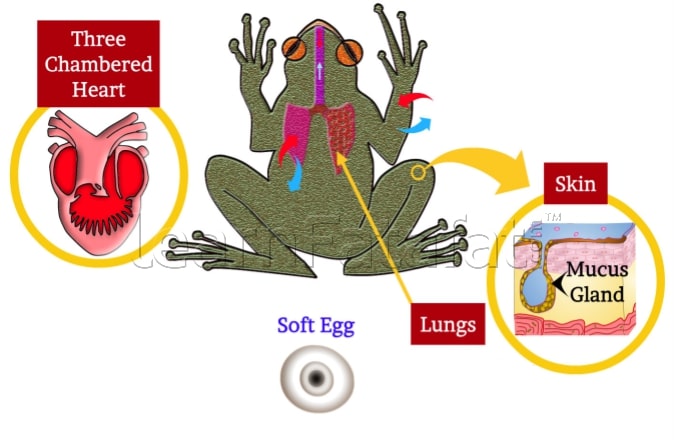
Animals in class amphibia have the ability to live on land as well as water. Heart of these animals are three chambered. Skin contains mucus glands. Skin and lungs allows the breathing underwater and on land respectively. Amphibians lays eggs underwater as eggs are soft and lack outer hard covering. This avoids drying of eggs. All amphibians are cold blooded animals. Example of amphibians are frog, toad, salamander, etc.
Reptilia

Vertebrata: Reptilia
All animals falling under class reptilia have scales on skin. Reptile breathe through lungs. These animals are cold blooded and heart is made of three chambers. Among reptiles, crocodile is exception i.e. it has four chambered heart. Eggs of reptiles contains outer hard covering and hence they eggs on land. Some examples of reptiles are snakes, turtle, lizards, crocodiles, etc
Aves
Vertebrata: Aves
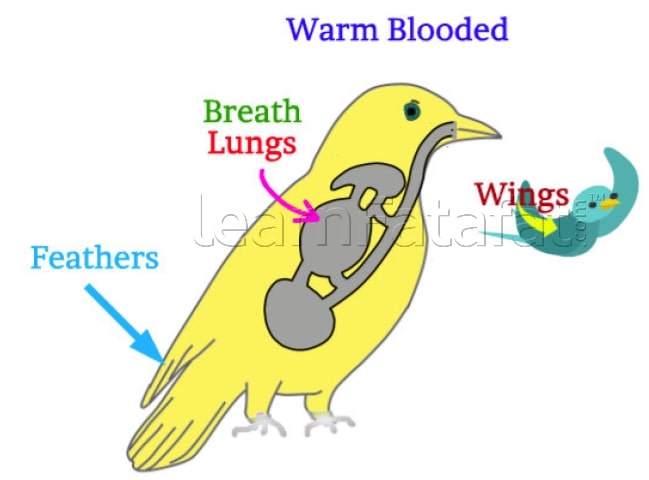
Class Aves contains all birds. Body of birds is covered with feather. They posses wings which allows them to fly. Breathing is possible due to presence of lungs. All birds are warm blooded animals. Moreover, aves lays eggs to produce young ones. Some examples of aves are parrot, pigeons, crow, ostrich, etc.
Mammalia
Vertebrata: Mammalia
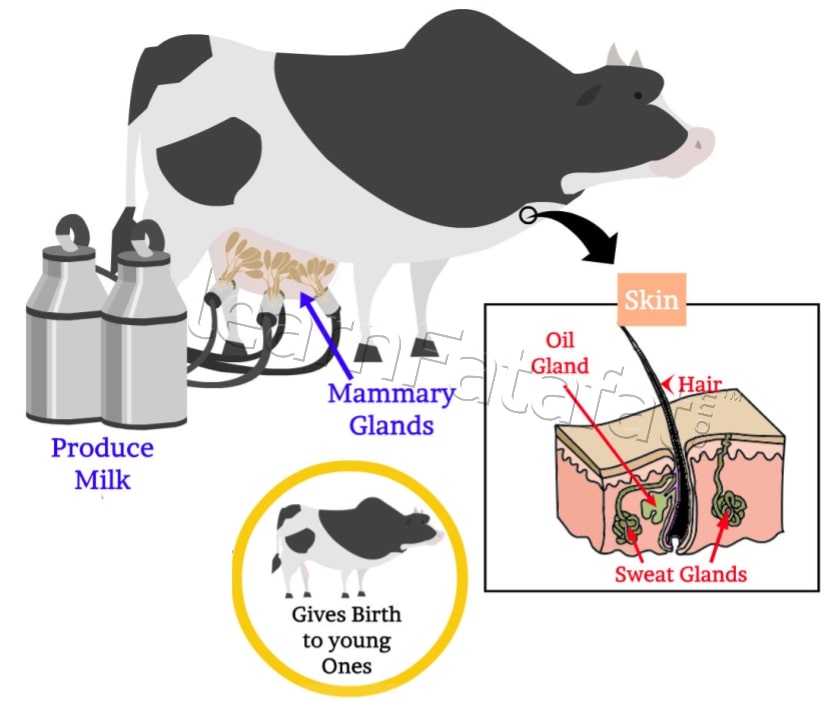
Class mammalia contains animals having mammary glands and can produce milk. Skin of mammals are hairy and contains sweat and oil glands. Mammals give birth to young ones only platypus produces youngs one by laying eggs. Mammals are warm blooded animals. Examples of mammals are, humans, cats, dogs, cows, etc.
Keywords: Vertebrates, Pisces, Amphibia, Reptilia, Aves, Mammalia, Cold blooded animal, Warm blooded animal, CBSE Class 9 Vertebrata, CBSE Class 9 Animalia
Next article Ohm’s Law
Related articles
Structure and Functions of Plasma Membrane in a Cell
Structure and functions of human eye
Sex Determination in Human beings
Working of Human Digestive System
Animal tissue and its functions